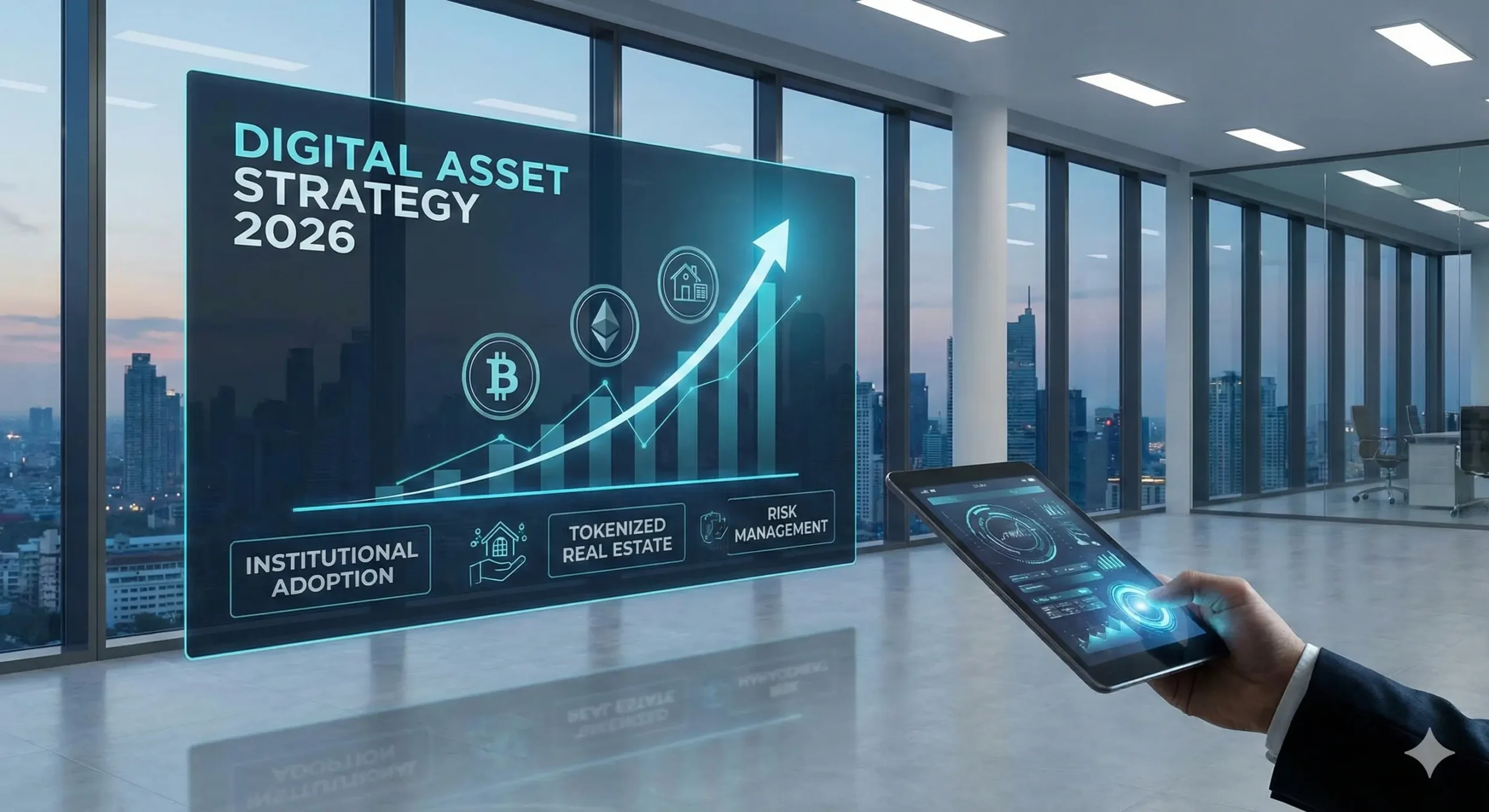
How to invest in digital assets has evolved from a speculative gamble into a structural necessity for modern portfolios. By early 2026, the question is no longer if you should invest, but how to allocate capital efficiently in a market now anchored by institutional giants. With Bitcoin and Ethereum ETFs firmly established and the tokenization of real-world assets (RWAs) surpassing $21 billion in total value locked, the digital economy has matured into a regulated, multi-trillion-dollar asset class.
This guide moves beyond the basics of buying cryptocurrency. It explores long-term wealth preservation, the rise of tokenized securities, and the sophisticated risk management frameworks required to navigate the “Institutional Era” of 2025-2026.
The New Digital Asset Landscape: 2025-2026 Outlook
The investment landscape has shifted dramatically. The days of unregulated “Wild West” speculation are fading, replaced by regulatory clarity in major jurisdictions like the EU (via MiCA) and the US. For investors, this transition offers new vehicles for entry that prioritize security and compliance. [1]
The Rise of Spot ETFs and ETPs
The approval of Bitcoin and Ethereum Spot ETFs in 2024-2025 marked the bridge between traditional finance (TradFi) and decentralized finance (DeFi). In 2026, the market is anticipating the expansion of these products to include assets like Solana and diversified crypto-index funds.
- Why it matters: ETFs remove the technical barrier of self-custody. Investors can now gain exposure to digital assets through familiar brokerage accounts, treating them like commodities or tech stocks.
- Trend: Major asset managers like BlackRock and Fidelity continue to see net inflows, signaling that digital assets are becoming a standard component of retirement planning and corporate treasuries.
Tokenized Real-World Assets (RWAs)
Perhaps the most significant trend for the sophisticated investor is RWA tokenization. This involves placing tangible assets-such as real estate, U.S. Treasury bills, and private credit-on the blockchain.[2]
According to a 2026 outlook by Grayscale and other institutional researchers, tokenized assets are redefining liquidity. Instead of holding idle cash, investors are utilizing on-chain money market funds that offer 24/7 liquidity and yield transparency.
Expert Insight: “Tokenization can greatly expand the world of investable assets… broadening access to investment opportunities.” – Larry Fink, CEO of BlackRock (referencing the strategic shift toward digitized securities).
Strategic Allocation: Building a Core-Satellite Portfolio
Learning how to invest in digital assets requires a disciplined approach to asset allocation. Institutional investors typically cap exposure between 1% and 5% of their total portfolio, though risk-tolerant retail investors often go higher. A robust strategy for 2026 follows the Core-Satellite model.
1. The Core: Store of Value & Smart Contract Platforms (60-80%)
Your “Core” consists of blue-chip assets that have proven track records, high liquidity, and institutional support.
- Bitcoin (BTC): Viewed as “digital gold” or a hedge against monetary debasement. It anchors the portfolio with lower relative volatility compared to the broader market.
- Ethereum (ETH): The foundational layer for the majority of DeFi and RWA applications. Investing in ETH is akin to investing in the internet’s infrastructure.
2. The Satellite: High-Growth Sectors (20-40%)
The “Satellite” portion seeks alpha (excess returns) by targeting emerging narratives. In 2025-2026, three sectors dominate:
- DeFi 2.0: Protocols that generate real yield through lending and trading fees, rather than inflationary token emissions.
- Infrastructure (Layer 2s & Interoperability): As blockchain traffic grows, networks that make transactions faster and cheaper (like Arbitrum, Optimism, or cross-chain solutions) capture immense value.
- Tokenized Securities: Governance tokens of platforms facilitating the trade of tokenized real estate or bonds.
Execution: Custody and Platforms
Selecting the right venue for execution is as critical as asset selection. The collapse of major exchanges in previous cycles has taught investors that “not your keys, not your coins” is more than a slogan-it is a survival mechanism.
Centralized Exchanges (CEX) vs. Decentralized Exchanges (DEX)
- CEX (e.g., Coinbase, Kraken): Best for onboarding fiat currency. In 2026, reputable CEXs are heavily regulated, often holding “Qualified Custodian” status.
- DEX (e.g., Uniswap): Best for accessing satellite assets not yet listed on major exchanges. DEXs offer deep liquidity for niche tokens but require a higher technical learning curve.
The Standard for Storage
For long-term holding, leaving assets on an exchange is a risk management failure.[3]
- Hardware Wallets (Cold Storage): Devices like Ledger or Trezor keep private keys offline, immune to remote hacks.
- Multi-Signature (Multi-Sig) Wallets: For larger portfolios or corporate entities, multi-sig wallets require approval from multiple devices to authorize a transaction, eliminating the single point of failure.
Risk Management Strategies for the Digital Investor
Volatility in digital assets has compressed significantly since 2020, but it remains higher than traditional equities. Effective risk management involves three pillars.
1. The “1-5% Rule” and Rebalancing
Never allocate more capital than you can afford to lock away for 4+ years. A common institutional standard is the 1-5% Rule: allocate 1% to 5% of your net worth to digital assets.
- Action: If a bull market pushes your crypto allocation to 10% of your portfolio, rebalance by selling the excess and moving it into stablecoins or traditional equities. This automates the practice of “buying low and selling high.”
2. Understanding Smart Contract Risk
Unlike stocks, digital assets carry technical risk. A protocol can be hacked, or a smart contract can fail.
- Mitigation: Only invest in “battle-tested” protocols that have undergone multiple audits by reputable firms (like CertiK or Trail of Bits) and have secured billions in value for years without incident.
3. Regulatory Compliance
In 2026, regulatory risk is less about “bans” and more about tax and compliance.
- Tax Efficiency: Use automated crypto tax software to track cost basis across chains. In jurisdictions like the US and UK, wash-sale rules and capital gains taxes are strictly enforced.
- Stablecoin Safety: When moving to cash, prioritize regulated stablecoins (like USDC) that publish monthly attestations of their reserves, rather than opaque algorithmic alternatives.
People Also Asked
Is it too late to invest in digital assets in 2026? No. While the early speculative phase is over, the market is entering a phase of steady, utility-driven growth. Institutional adoption typically reduces volatility and increases long-term stability, making it a viable time for conservative investors to enter.
What is the safest way to invest in crypto? The safest method for most investors is through Spot ETFs offered by major brokerages. These products are regulated and handled by professional custodians, removing the risks associated with self-custody and lost private keys.
How do I pay taxes on digital assets? In most jurisdictions, digital assets are treated as property. You owe capital gains tax when you sell crypto for fiat, trade one crypto for another, or use it to buy goods. Using specialized tax software is highly recommended to track these events accurately.
What are Real-World Assets (RWAs) in crypto? RWAs are digital tokens that represent physical or traditional financial assets, such as real estate, gold, or government bonds. They allow these assets to be traded 24/7 on the blockchain with greater transparency and lower fees.
Conclusion
Mastering how to invest in digital assets in 2026 requires a shift in mindset. The strategy has moved from “getting rich quick” to integrating a high-growth technological asset class into a diversified wealth preservation plan. By focusing on regulated infrastructure, adhering to the core-satellite allocation model, and utilizing cold storage, investors can capture the upside of the digital economy while mitigating its inherent risks.
As adoption deepens, the line between “digital” and “traditional” finance will continue to blur. As Jennifer Johnson, CEO of Franklin Templeton, noted during industry shifts in 2025, the scale of the crypto space is often underestimated, but its ability to optimize financial infrastructure is becoming undeniable.[4]


.)